














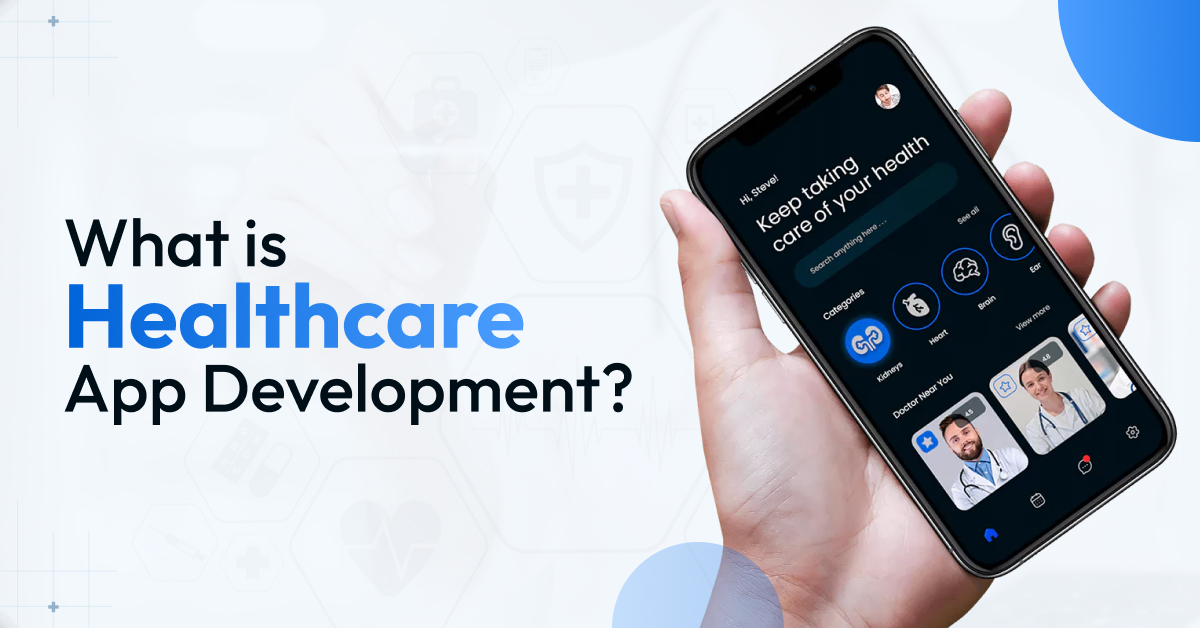
You must have seen parents tracking a child’s fever, doctors checking a patient’s reports, or elderly citizens getting medicine reminders. Shockingly, not physically, but virtually on a mobile app. Yes, this has become a new normal for this today’s digitalized and mobile-first generation.
Basically, this generation is no longer mobile-first but has become mobile-only, and this is where healthcare app development makes a heroic entry. These apps help users in booking appointments, storing medical records, monitoring fitness, and reminding users to take medicines online.
These digital healthcare solutions allow patients to connect with doctors within a few taps. But do you know what comes behind the scenes? The skillful and highly experienced healthcare app developers design these apps to be used securely, easily, and accurately.
If you are an entrepreneur with a goal to make healthcare mobile app development more accessible for everyone in 2026, this guide is definitely for you.
What Is Healthcare App Development?
The healthcare app development process involves designing and creating a digital solution for the healthcare and medical sector. The purpose of mobile app development in the healthcare sector is to improve patient care, clinical workflows, and manage medical data.
The healthcare application development strictly works according to regulations, like HIPAA/GDPR. With this, they can offer safe, compliant, and user-friendly tools for patients, doctors, and hospitals. It also covers telemedicine, appointment booking, chronic care management, and other features.
With the healthcare app, it becomes easier for patients to access personalized care, treatment, and self-management tools. The healthcare application development allows doctors to provide better efficiency, data access, reduced burnout, and accurate diagnoses.
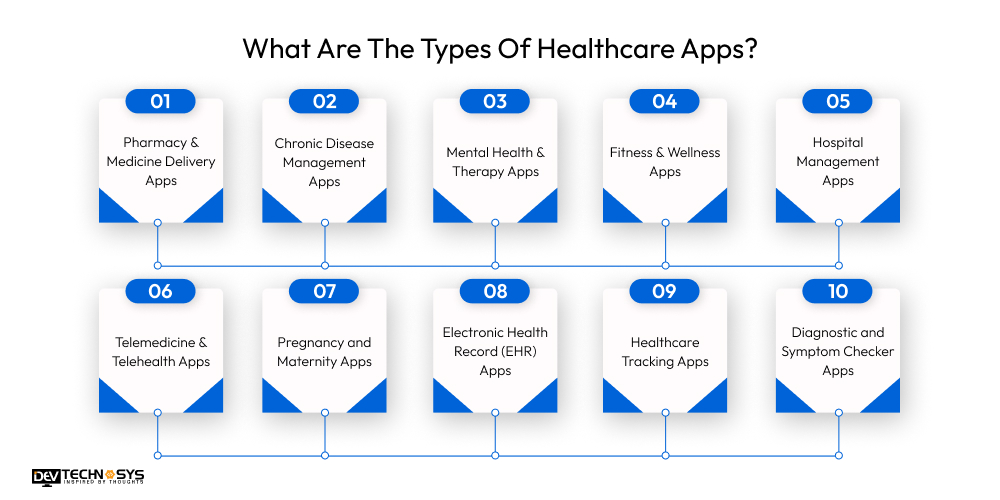
What Are The Types Of Healthcare Apps?
Healthcare app development is not restricted to one but has a broad spectrum, including Patient management systems, telemedicine apps, fitness & wellness apps, etc. Now, we will discuss some of the types of medical app development.
1. Pharmacy & Medicine Delivery Apps
A pharmacy and medicine delivery app is a platform where users can upload prescriptions and order medicines online. These medicines can easily be delivered to their doorstep. With these apps, users can also get consultation services in a timely and secure way, along with medications and medical supplies.
Popular Examples: 1mg, Capsule, Netmeds, PillPack, Rite Aid, Walgreens, etc.
Key Features:
- Product recommendations
- Pharmacy locator & availability check
- Online medicine ordering
- Prescription uploads & verification
- Home delivery tracking
2. Chronic Disease Management Apps
Among digital healthcare solutions, the chronic disease management apps are designed to improve long-term health outcomes. Such healthcare software development helps users in managing long-standing illnesses like diabetes, asthma, and so on. It provide daily monitoring and medication adherence to maintain personalized care.
Popular Examples: Medisafe, MyTherapy, MyFitnessPal, Sleep Cycle, MySugr, Qardio, AsthmaMD, etc.
Key Features:
- Emergency alerts & notifications
- Health parameter tracking
- Medication & appointment reminders
- Doctor consultation integration
- Personalized care plan
3. Mental Health & Therapy Apps
Taking mental health seriously, mental health and therapy apps support the emotional well-being of users. These HIPAA compliant healthcare apps create tools to analyze the levels of stress, anxiety, and depression. These apps deliver guided therapy, mood tracking, and coping exercises to help users develop healthy habits while stabilizing mental health.
Popular Examples: Talkspace, Calm, Happify, Moodfit, Headspace, Breathe2Relax, etc.
Key Features:
- Mood tracking tools
- Guided meditation sessions
- Therapy chat access
- Stress management exercises
- Mental health assessments
4. Fitness & Wellness Apps
Another popular type of healthcare app development is fitness and wellness apps. These apps help users maintain a healthy lifestyle by tracking their physical activities, workout sessions, sleep cycle, and nutrition. With this, users can set their goal, stay motivated, and enhance their well-being.
Popular Examples: Strava, Fitbit, MyFitnessPal, Headspace, Nike Training Club, Aaptiv, etc.
Key Features:
- Sleep tracking
- Gamification & achievement badges
- Step counting & activity tracking
- Nutrition & calorie monitoring
- Personalized workout routines
5. Hospital Management Apps
The healthcare software development services also include hospital management apps that are necessary to simplify administrative and clinical operations.
Also Read: Healthcare App Development And Company Selection Guide
These apps can streamline the patient records, appointments, staff schedules, billing, and communication. It improves efficiency and coordination while reducing the chances of errors.
Popular Examples: SoftClinic Software, Hims Hospilogix, Net Health, Smartsheet, athenaOne, etc.
Key Features:
- Inventory & supply tracking
- Patient registration & scheduling
- Electronic health record management
- Billing & invoice generation
- Staff & shift management
Want a chatbot demo or pricing? Fill the form and talk to our experts today.
Pick what you need below — you can select more than one — then tap Get detail to continue.
-
Chatbot demo dashboard
-
Cost to develop an app
-
Industry report
-
Case study
6. Telemedicine & Telehealth Apps
Telemedicine Software development let users connect with doctors for consultation through video call or normal chat. With this, patients can get access to healthcare online, especially in areas where quality hospitals and clinics are not available. Telemedicine app development also reduces the travel time for regular follow-ups, mainly for remote areas and senior citizens.
Popular Examples: Teladoc Health, Amwell, Babylon Health, Practo, MFine, Doctor On Demand, talkspace, etc.
Key Features:
- Video doctor consultations
- Secure chat messaging
- Remote diagnosis support
- E-prescription services
- Appointment booking tools
7. Pregnancy and Maternity Apps
When it comes to Healthcare SaaS development, another app type that comes in is pregnancy and maternity apps. These healthcare software development are perfect for expecting mothers, where they can track fetal development, health changes, and appointments. It also offers educational content, reminders, and wellness tips to keep informed about the pregnancy journey.
Popular Examples: Pregnancy+ (Philips), BabyCenter Pregnancy Tracker, Sprout Pregnancy, Flo, etc.
Key Features:
- Pregnancy week tracking
- Fetal development updates
- Health appointment reminders
- Nutrition guidance tips
- Baby kick counter
Have a look: Top Medical Staffing Apps
8. Electronic Health Record (EHR) Apps
The purpose of an electronic health record (EHR) app is to store and manage patients’ medical records digitally. These apps can even allow healthcare providers to get histories, test results, and treatment of patients. EHR app development enhances the accuracy, coordination, and continuity of care across medical facilities.
Popular Examples: Practice Fusion, Allscripts, Athenahealth, AdvancedMD, eClinicalWorks, Meditech, etc.
Key Features:
- Digital patient records
- Lab result access
- Treatment history tracking
- Secure data storage
- Provider information sharing
9. Healthcare Tracking Apps
A healthcare tracking app allows users to monitor their health data, including heart rate, blood pressure, and glucose levels every day. They deliver care measures by identifying the issue and supporting healthy habits. If there is any problem in your reports, an enterprise healthcare software development can share your data with doctors.
Popular Examples: Teladoc Health, Headspace, Apple Health, EyecareLive, Inc., Fitbit, Medisafe Medication Management, etc.
Key Features:
- Vital sign monitoring
- Daily health logs
- Trend analysis charts
- Wearable device integration
- Data sharing options
10. Diagnostic and Symptom Checker Apps
Diagnostic and symptom checker apps can help users understand the possible health conditions just by entering symptoms. These digital healthcare solutions offer early insights, health advice, and guidance on current results. They also provide professional medical attention if needed to support proper healthcare decisions.
Popular Examples: Ada, WebMD, Symptomate, Babylon, K Health, Mediktor, NHS 111, etc.
Key Features:
- Symptom input system
- Condition prediction tools
- Health risk assessment
- Medical advice guidance
- Doctor visit recommendations
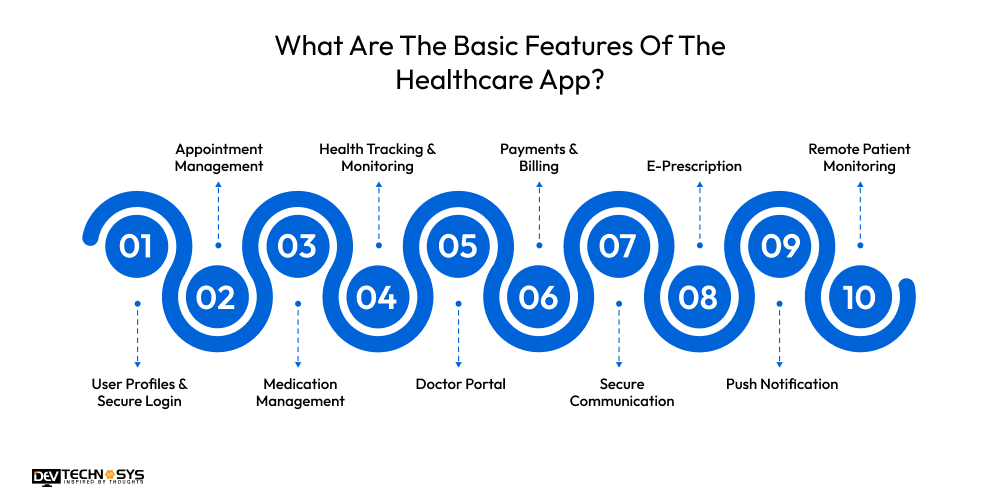
What Are The Basic Healthcare Mobile App Features?
Healthcare app features are really essential, which mainly focus on patient access, data security, and provider efficiency. Now, we will know about the essential features a healthcare startup app development must have.
1. User Profiles & Secure Login
Allow users to log in or sign up to the app with secure login passwords or biometrics. Easy and secure login of users to the app ensures seamless access to the app while maintaining high privacy and security. A healthcare app development company integrates this feature into every GDPR or HIPAA-compliant healthcare app.
2. Appointment Management
Appointment management is a feature that allows users to book, schedule, reschedule, or cancel their visits to doctors. It upgrades the health and care services and lowers the unnecessary waiting time. It even streamlines the workflows of the MVP development for healthcare startups or businesses.
3. Medication Management
Medication management is also an important feature of a healthcare CRM software, which manages and tracks prescriptions, dosages, and schedules.
Also Read: AI in Healthcare App Development
This feature sends proper reminders to improve compliance and lower errors. This is a common feature integrated in ePrescription app development and EMR software development systems.
You can reach out anytime; we are available 24/7. Our team provides a quick response.

4. Health Tracking & Monitoring
The healthcare tracking and monitoring feature can be the best integration in the healthcare application development process. This feature is mainly found in a remote patient monitoring app that records the blood pressure, glucose levels, diabetes, or heart rate. With this feature, continuous monitoring and better decision-making can be easily done.
5. Doctor Portal
A doctor portal is an essential and dedicated segment within a Healthcare MVP development. It allows doctors, professionals, or physicians to manage patients, medical records, appointments, and prescriptions. Its main purpose is to improve workflow efficiency while enabling smooth communication that supports informed decision-making.
6. Payments & Billing
To develop a healthcare app like HealthTap, one essential feature, payments and billing, should be present in the app. This feature authorizes secure and seamless online transactions for services or consultation. It also supports transparency with efficient financial management in secure healthcare application development.
7. Secure Communication
Secure communication is a necessary feature of healthcare application development. It allows healthcare data encryption in chat or video calls between patients and doctors. The data encryption and GDPR compliant healthcare software maintain the privacy and safety of the information shared.
8. E-Prescription
Another popular feature of healthcare application development includes e-prescribing. This feature enables medical professionals to send digital prescriptions to patients or pharmacies. It helps reduce hectic paperwork and medication errors. It also supports faster and more accessible treatment of the patients.
9. Push Notification
Getting regular updates on upcoming appointments, medication times, or test results can enhance user engagement. It is one of the core features of any healthcare app development roadmap. It gives alerts to the user for multiple things, continuously making them stay updated on the latest things.
10. Remote Patient Monitoring
The remote patient monitoring app collects exact, real-time data of the user through the connected wearable or device. This feature supports continuous care, reduces hospital visits, and is key to developing a seamless and most efficient healthcare application.

What Are The Advanced Healthcare Mobile App Features?
Apart from the basic, core features, there are multiple advanced features integrated into a healthcare app. It includes features such as AI Symptom Checkers, Wearable Device Integration, Remote Patient Monitoring, Telehealth, and so on. Here we will discuss some of these features.
Also Read: Healthcare MVP to Enterprise SaaS Roadmap: A Complete Guide
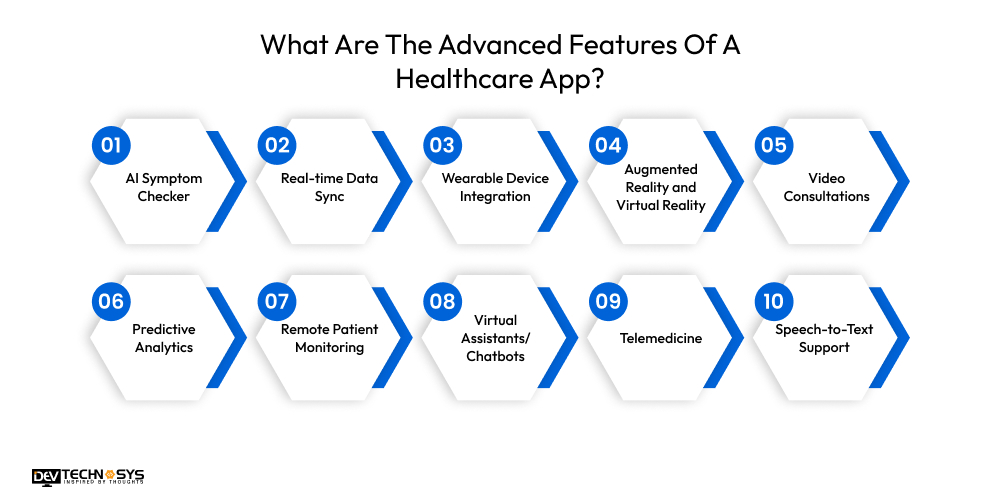
1. AI Symptom Checker
An AI symptom checker is one of the most common features for those looking for Healthcare AI solutions. It helps users by understanding the possible health issues with the symptoms provided manually. It also uses machine learning to offer quick guidance before you reach out to a doctor.
2. Real-time Data Sync
When the real-time data gets synced to the app, it updates the user’s health details immediately across systems. Such apps are supported by HL7 FHIR integration, which helps patients and doctors to get accurate and up-to-date medical data.
3. Wearable Device Integration
A wearable device integration is a feature that connects the app with smartwatches and fitness bands. This is a common feature in IoT healthcare application development that automatically tracks the heart rate, BP, or activity level through wearables.
4. Augmented Reality and Virtual Reality
Augmented Reality (AR) and Virtual Reality (VR) deliver an outstanding experience to patients, especially during therapy and training. This allows users to understand the medical procedure and treatments virtually with more clarity.
5. Video Consultations
AI in healthcare app development allows users to meet doctors online through safe and encrypted video calls. It helps in saving the travelling time of the patients and even upgrades the reach to medical care in regions where hospital facilities are limited.
6. Predictive Analytics
The integration of predictive analytics in healthcare can easily analyze the past and current health data to identify health risks in the future. This helps doctors in making early decisions and enhancing patient outcomes.
7. Remote Patient Monitoring
Remote patient monitoring continuously tracks the health of patients from home or wherever they are. This feature sends alerts to doctors about even minor changes. It enables faster response and better long-term care management.
8. Virtual Assistants/Chatbots
Virtual assistants or chatbots can easily answer health-related questions, schedule appointments, and send reminders. These healthcare AI solutions upgrade user satisfaction while decreasing manual workload.
Also Read: HL7 & FHIR Integration In Healthcare Apps
9. Telemedicine
Telemedicine is an advanced feature that goes beyond just video consultation and provides more personalized healthcare solutions. It is one of the core features in custom healthcare app development projects.
10. Speech-to-Text Support
Speech-to-text support can seamlessly transform spoken or verbal medical conversations into written records. It helps doctors save time, reduce typing, and maintain accurate clinical documentation.
Conclusion
Healthcare application development is a journey that turns medical care into an accessible, efficient, and patient-focused digital experience. The main focus of healthcare app development cost and feature is to improve health outcomes and user engagement.
This development is a digital tool that connects patients with doctors anytime, anywhere. A healthcare application development incorporates secure technology, thoughtful design, and innovation. It also bridges distance, simplifies treatment, and quietly improves lives.
In a nutshell, healthcare app development is a more accessible and reliable way to reach medical treatment digitally.
Frequently Asked Questions
Find answers to the most common questions related to this article.
The healthcare application development is a process to design and build an application, especially for digital medical solutions. It provides secure, adaptable, and easy-to-use digital tools for patients, doctors, and hospitals.
The final healthcare app development cost can be commonly estimated somewhere between $8,000 and $30,000. This cost usually depends on its complexity, number of features, platform choice, security, integrations, and other factors.
Some of the key features and functionalities of a healthcare application development include:
Basic Features
User Profiles & Secure Login
Medication Management
Health Tracking & Monitoring
Payments & Billing
Push Notification
Advanced Features
AI Symptom Checker
Real-time Data Sync
Video Consultations
Predictive Analytics
Virtual Assistants/Chatbots
A large number of advanced trends are getting involved in healthcare app development. Here are some of these latest trends:
Artificial Intelligence
Machine Learning
IoT/Wearables
Blockchain
Augmented Reality (AR)/Virtual Reality (VR)
As we have learnt before, the spectrum of healthcare apps is really large. Some of the most common types of healthcare application development are:
Mental Health & Therapy Apps
Hospital Management Apps
Telemedicine & Telehealth Apps
Pregnancy and Maternity Apps
Healthcare Tracking Apps
Diagnostic and Symptom Checker Apps