






“Tap, shop, get delivered”
In daily life, groceries are one of the most essential items that are much needed. That’s why local grocery stores are too busy and need to stand in line.
Let’s skip the queue.
Tap on the grocery delivery applications and have the grocery items delivered to your doorstep within a few minutes.
A grocery store delivery app like Snappy Shopper that offers unique features such as connecting with local grocery shops, order tracking, and scheduling delivery. With these features, the demand for this app has increased significantly, and user loves this app.
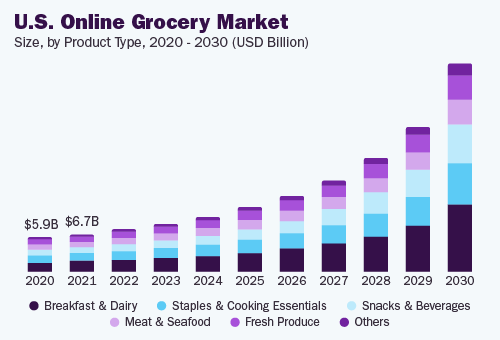
As per the global market, the instant grocery delivery applications market valuation is around $938.98 billion in 2025. This is projected to increase to around $1.49 trillion by the end of 2030.
By reviewing the above information, investing in the grocery delivery app development is one of the profitable opportunities for businesses.
In this blog, we offer detailed information about how to build a grocery delivery app like Snappy Shopper and what functionalities must be added.
What is Snappy Shopper?
Snappy Shopper is a UK-based instant grocery delivery app that links users to local convenience stores such as Nisa, SPAR, and One Stop. It provides rapid, contactless delivery of food, beverages, and home items to your door, frequently within 30 minutes.
The grocery delivery apps are ideal for busy people or last-minute requirements, as they offer a diverse product selection and support local companies. Snappy Shopper, which is available on both Android and iOS, is a quick, same-day grocery delivery option.
- Fast Local Delivery
- Supports Local Shops
- Easy-to-Use Interface
- Scheduled Deliveries
Market Stats of Global Grocery Delivery Applications
- In 2025, the market for grocery shopping app delivery is expected to be worth $938.98 By the end of 2030, this is expected to rise to over $1.49 trillion.
- As per the ground-level report, revenue is anticipated to rise at a 74% annual rate (CAGR 2025–2030).
- Comparatively speaking, the United States will produce the greatest income (US$327.72 billion in 2025).
- In 2025, the grocery delivery market’s average revenue per user (ARPU) is anticipated to reach US$546.12.
- It is anticipated that there will be3 billion consumers in the grocery delivery sector by 2030.
- In 2025, there will be 9% of users in the grocery delivery sector.
10 Popular Grocery Delivery Apps like Snappy Shopper
Discover 10 best grocery delivery apps like Blinkit or Snappy Shopper offering fast, convenient, and reliable local grocery shopping and delivery right to your doorstep.
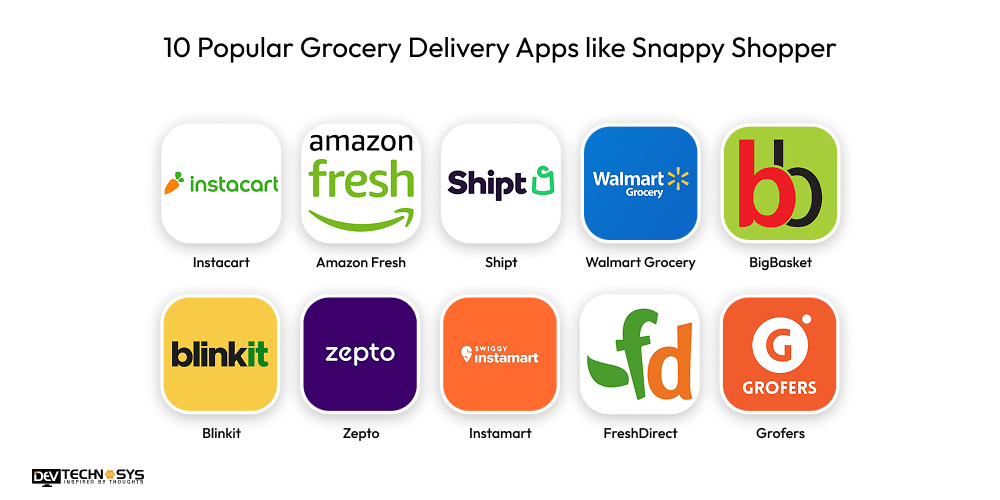
| App Name | Downloads | Stores Ratings | Launch Year | Platform Availability |
| Instacart | 50M+ | 4.8 | 2012 | iOS, Android, Web |
| Amazon Fresh | 10M+ | 4.7 | 2007 | iOS, Android, Web |
| Shipt | 10M+ | 4.7 | 2014 | iOS, Android, Web |
| Walmart Grocery | 50M+ | 4.5 | 2013 | iOS, Android, Web |
| BigBasket | 50M+ | 4.4 | 2011 | iOS, Android, Web |
| Blinkit | 50M+ | 4.4 | 2013 | iOS, Android, Web |
| Zepto | 10M+ | 4.4 | 2021 | Android, iOS |
| Instamart | 100M+ | 4.4 | 2020 | Android, iOS |
| FreshDirect | 1M+ | 4.5 | 2002 | iOS, Android, Web |
| Grofers | 10M+ | 4.2 | 2013 | Android, iOS |
Why Entrepreneurs Want to Build an App Like Snappy Shopper?
In today’s digital world, convenience is everything. Entrepreneurs are increasingly interested in build a delivery service app like Snappy Shopper due to the rapid growth of online shopping and the demand for local, on-demand services. Here are five key reasons why:
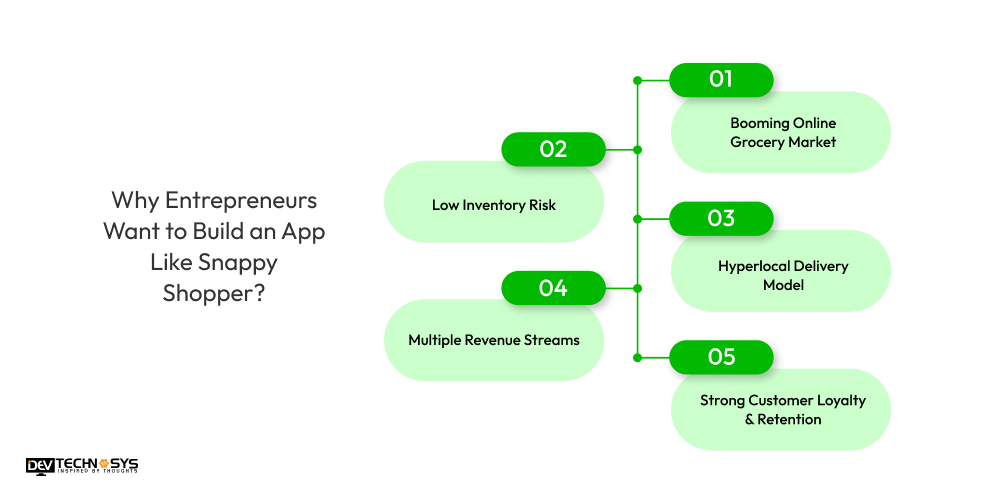
1. Booming Online Grocery Market
The global online grocery market is expanding rapidly. With busy lifestyles and increased smartphone usage, more people prefer to shop from home. Similar app like Snappy Shopper have tapped into this demand, offering same-day delivery from local stores. Entrepreneurs see this as a profitable, fast-growing sector.
2. Low Inventory Risk
Unlike traditional e-commerce, apps like Kibsons don’t hold inventory. They partner with existing stores, acting as a delivery bridge between retailers and customers. This model reduces overhead costs and startup risks, making it appealing for entrepreneurs with limited capital.
3. Hyperlocal Delivery Model
The similar app like Snappy Shopper connects users with nearby convenience stores, making deliveries fast and cost-effective. This hyperlocal model minimizes delivery time and logistics challenges. Entrepreneurs are drawn to this because it allows them to scale regionally and build partnerships with local retailers more easily than national chains.
4. Multiple Revenue Streams
Grocery delivery apps like Instacart earn through delivery fees, commissions from store partners, subscription plans, ads, and promotional placements. These diverse income sources create strong profit potential. Entrepreneurs see an opportunity to build sustainable revenue models in this space.
5. Strong Customer Loyalty & Retention
When users find a fast, reliable delivery service, they tend to stick with it. Offering convenience, real-time tracking, and personalized deals helps retain customers. Entrepreneurs understand that app similar to Snappy Shopper build lasting relationships through consistent service, driving repeat business and long-term growth.
How AI Can Help Grocery Delivery Applications?
- AI predicts customer preferences to personalize grocery recommendations, boosting user satisfaction and increasing repeat purchases efficiently.
- Intelligent route optimization powered by AI reduces delivery times and fuel costs, ensuring faster, eco-friendly grocery deliveries.
- AI-powered chatbots handle customer queries instantly, providing 24/7 support and improving overall app user experience.
- Demand forecasting with AI helps grocery stores manage inventory better, reducing waste and preventing stockouts during peak times.
- AI automates order processing and allocation to nearest delivery drivers, increasing operational efficiency and minimizing errors.
7 Major Steps to Build a Grocery Delivery App like Snappy Shopper
Build a Grocery Delivery App like Snappy Shopper to offer fast, convenient, and local grocery delivery. Connect customers with nearby stores through an easy-to-use app featuring real-time tracking, secure payments, and seamless order management for a smooth shopping experience. So, here we provide the robust grocery delivery mobile app development process:
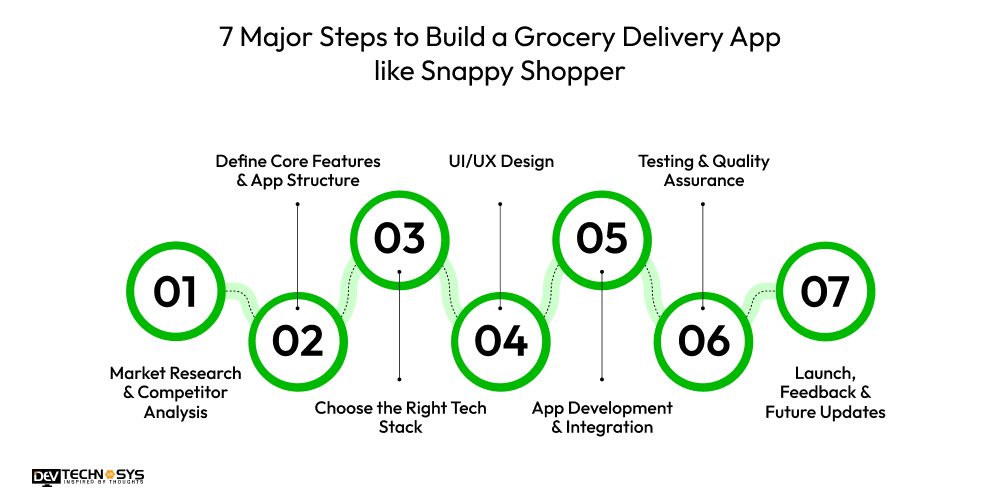
1. Market Research & Competitor Analysis
Let’s start the first stage to develop an app like Snappy Shopper, analyze your target audience, competitors, and grocery delivery trends. Identify customer needs, pain points, and popular app features. Hire mobile app developers to create a unique app that meets market demands and stands out from competitors like Snappy Shopper.
| Which competitors exist in the market? |
| How do competitors price their services? |
| Who is the target audience? |
2. Define Core Features & App Structure
Determine essential features such as real-time tracking, multiple payment options, store integration, and notifications. Plan the app’s architecture, including customer, delivery agent, and store manager interfaces, to ensure smooth, efficient operations for all users.
| What are the must-have app features? |
| How will the app handle orders? |
| Will there be separate panels for stores and delivery agents? |
3. Choose the Right Tech Stack
Move to the third stage to create an app like Snappy Shopper, select scalable, reliable technologies for front-end and back-end development. Use frameworks like React Native or Flutter for cross-platform compatibility. Hire dedicated developers to ensure the tech stack supports seamless integration, fast performance, and future updates for both Android and iOS apps.
| Should we use native or cross-platform development? |
| Which programming languages suit this app? |
| What backend framework is best for scalability? |
4. UI/UX Design
In the fourth step to build an app like Snappy Shopper, create an intuitive, engaging design tailored for customers, delivery agents, and store managers. Focus on easy navigation, quick checkout, and clear visuals. Make sure the interface is responsive and accessible to improve user satisfaction and retention.
| What colors and styles appeal to the target audience? |
| Is the design consistent across all screens? |
| Are buttons and icons clear and intuitive? |
5. App Development & Integration
Assemble the highly-skilled developers from a food delivery app development company to develop the app by coding front-end and back-end components. Integrate GPS tracking, payment gateways, SMS alerts, and store databases. Ensure smooth communication between customers, stores, and delivery agents within the app ecosystem for seamless order processing.
| How will GPS tracking be implemented? |
| What APIs are needed for messaging and notifications? |
| How to sync data between stores, delivery agents, and users? |
You can reach out anytime; we are available 24/7. Our team provides a quick response.

6. Testing & Quality Assurance
Perform comprehensive testing across devices and operating systems. Identify and fix bugs, crashes, and performance issues. Conduct usability testing to confirm all features work perfectly, including login, payment, tracking, and notifications, before launching the app publicly.
| Have all app features been tested on multiple devices? |
| Are payment processes secure and error-free? |
| Are there any bugs or crashes during use? |
7. Launch, Feedback & Future Updates
Hire an experienced mobile app development company to publish the app on Google Play and the Apple App Store. Monitor user feedback and app analytics closely. Regularly update the app to fix issues, add features, and enhance user experience, ensuring your app stays competitive and user-friendly in a growing market.
| Is the app ready for launch on all platforms? |
| How will user feedback be collected? |
| What features are planned for future updates? |
10 Advanced Features of a Grocery Delivery App like Snappy Shopper
Building a successful groceries delivery app requires more than basic functionality. To stand out and offer a seamless user experience like Snappy Shopper, incorporating these advanced grocery app development features is essential:
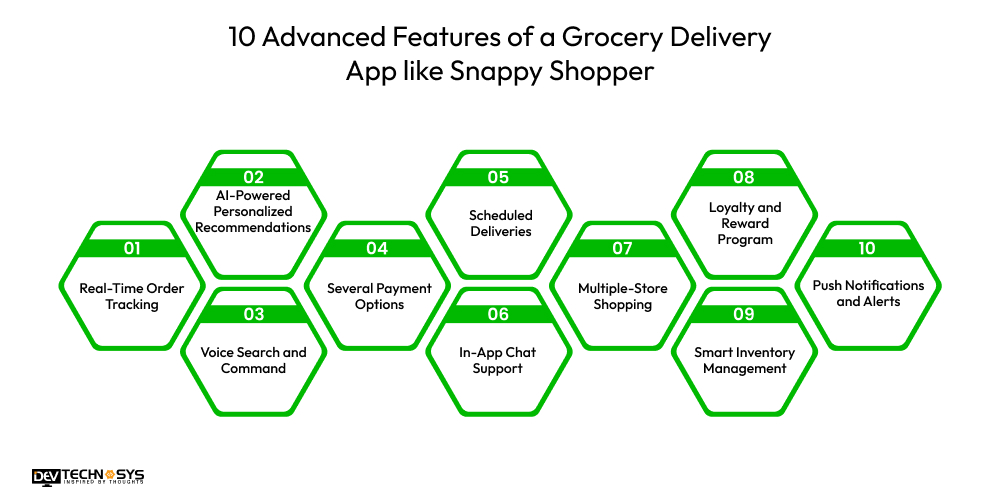
1. Real-Time Order Tracking
The Snappy Shopper alternatives allow customers to know the actual position of their delivery, increasing transparency and confidence.
2. AI-Powered Personalized Recommendations
Uses consumer purchase history and preferences to recommend related items, resulting in increased sales and user pleasure.
3. Voice Search and Command
An app like zepto allows users to search for goods and place orders using voice commands, making the app more accessible and user-friendly.
4. Several Payment Options
The Snappy Shopper clone app supports credit/debit cards, mobile wallets, UPI, and cash on delivery, allowing for a wide range of consumer preferences.
5. Scheduled Deliveries
Customers may select their chosen delivery day and time, making it more convenient for those with hectic schedules.
6. In-App Chat Support
The Snappy Shopper alternatives provide an immediate connection to customer support and delivery workers for issue resolution.
7. Multiple-Store Shopping
The cheapest grocery delivery app Snappy Shopper allows consumers to order from several local retailers using a single checkout, increasing product selection and ease.
8. Loyalty and Reward Program
Snappy Shopper clone app allows users to be rewarded with points, discounts, or money, which encourages repeat purchases.
9. Smart Inventory Management
An app like Shipt monitors stock levels in partner stores to avoid disappointments due to out-of-stock items.
10. Push Notifications and Alerts
To increase engagement, keep consumers up to date on order progress, discounts, and tailored offerings.
What is the Cost to Build a Grocery Delivery App like Snappy Shopper?
The cost to develop a grocery delivery app like Snappy Shopper typically ranges from $8,000 to $25,000. Key factors influencing the price include app complexity, platform choice (iOS, Android, or both), features like real-time tracking, payment integration, and user-friendly design.
Development time ranges from 3 to 6 months, involving UI/UX design, backend infrastructure, and testing. Additional costs may arise from ongoing maintenance, updates, and marketing. Choosing experienced developers or agencies can impact quality and grocery app development cost. Overall, the investment ensures a reliable, scalable grocery ordering apps tailored to market needs.
| Grocery Delivery App Development | Estimated Cost | Time Frame |
| Normal App Development | $8000 – $12000 | 2 to 6 Months |
| Mid-Complex App Development | $14000 – $19000 | 6 to 8 Months |
| High-Complex App Development | $25000+ | 9+ Months |
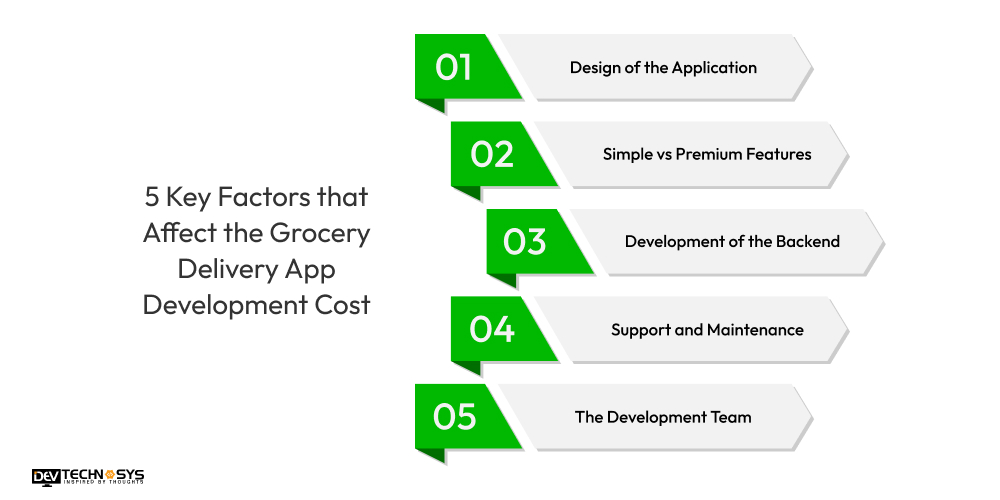
5 Key Factors that Affect the Grocery Delivery App Development Cost
App complexity, platform selection (iOS, Android, or both), essential features like real-time tracking and payment gateways, UI/UX design quality, backend infrastructure, development team expertise, integration with third-party services, testing requirements, and ongoing maintenance all significantly influence the overall grocery store billing software cost.
1. Design of the Application
The design influences both aesthetics and usefulness, which affects cost. A basic, clean design with standard elements is inexpensive, but a fully customized, visually rich interface requires more work and experience.
Bonus Read: Steps to Convert Grocery Store to an Online Store
Creating seamless navigation and an engaging user experience necessitates more design iterations, which increases the total grocery delivery app development cost.
| Design Quality | Cost Estimation |
| Basic Design | $8,000 – $12,000 |
| Complex Design | $15,000 – $22,000 |
2. Simple vs Premium Features
Basic functions such as product browsing and order placement are less expensive. However, incorporating complicated functions such as real-time GPS tracking, AI-based suggestions, dynamic pricing, or multi-vendor management necessitates specialized development skills, lengthier schedules, and thorough testing, all of which add considerably to the app’s overall mobile app development cost.
| Basic Features | Estimated Cost | Advanced Features | Estimated Cost |
| User Registration & Login | $6,000 – $9,000 | Social Media Login | $4,000 – $7,000 |
| Product Catalog | $4,000 – $7,000 | AI-Based Personalized Recommendations | $3,000 – $5,000 |
| Basic Search & Filters | $8,000 – $12,000 | Advanced Filters & Sorting | $10,000 – $14,000 |
| Order Placement | $7,000 – $11,000 | Multi-Delivery Scheduling | $7,000 – $10,000 |
| Order Tracking | $10,000 – $12,000 | Real-Time GPS Tracking | $10,000 – $15,000 |
3. Development of the Backend
A solid backend safely and effectively handles users, orders, payments, and inventories. Building a scalable backend that includes APIs, databases, cloud integration, and security measures is time-consuming and requires skilled engineers. The complexity of backend infrastructure has a direct impact on Snappy Shopper app development cost, particularly when great performance and reliability are required.
| Backend Complexity | Description | Estimated Cost (USD) | Estimated Time |
| Basic Backend | User data, orders, payments | $5,000 – $10,000 | 3 – 6 weeks |
| Advanced Backend | Scalable servers, APIs, cloud integration, and security | $10,000 – $18,000 | 6 – 10 weeks |
4. Support and Maintenance
After launch, ongoing maintenance is crucial for addressing issues, updating functionality, and maintaining server stability. Grocery delivery app maintenance services expenses vary according to program complexity, user base growth, and update frequency.
Regular monitoring, performance tuning, and troubleshooting are required for a good user experience. Therefore, support is a continuous cost throughout the app’s lifespan.
| Service Level | Description | Estimated Annual Cost (USD) | Estimated Time |
| Basic Support | Bug fixes, minor updates | $3,000 – $6,000 | Ongoing |
| Comprehensive Support | Frequent updates, performance optimization | $6,000 – $9,000 | Ongoing |
5. The Development Team
The Snappy Shopper app development cost vary depending on the team’s experience, size, and location. Experienced developers from higher-cost countries charge more yet provide higher-quality, quicker outcomes. Smaller, less experienced teams may save money, but they run the risk of delays and quality difficulties. Choosing the correct team achieves an efficient mix of cost, quality, and project deadline.
| Developers Experience level | United States | United Kingdom | Southeast Asia | Eastern Europe |
| Junior-level | $15 – $25 | £14 – £24 | $12 – $22 | $10 – $20 |
| Mid-level | $30 – $50 | £27 – £44 | $25 – $35 | $25 – $33 |
| Senior-level | $60 – $80 | £50 – £65 | $40 – $55 | $40 – $50 |

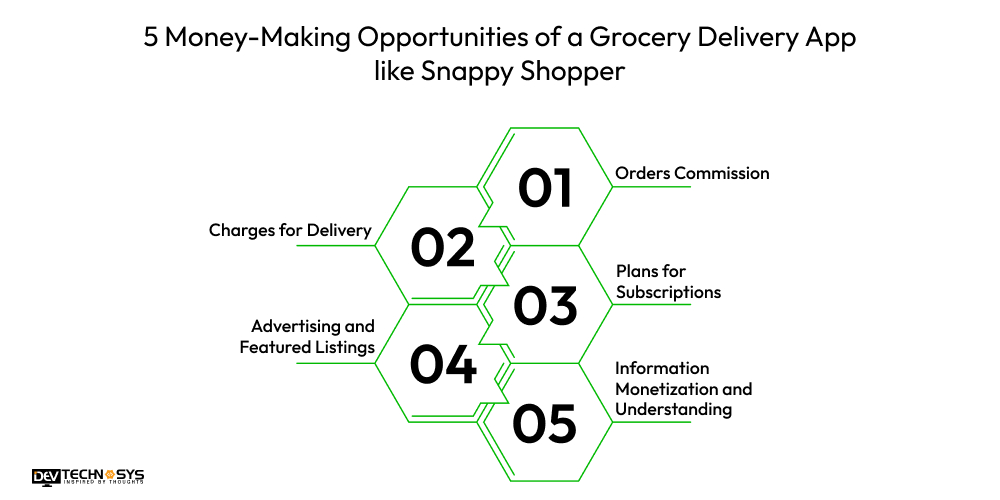
5 Money-Making Opportunities of a Grocery Delivery App like Snappy Shopper
These diverse revenue streams combine to make best grocery delivery apps like Snappy Shopper financially viable and scalable, catering to multiple stakeholders in the grocery ecosystem.
1. Orders Commission
Receiving a commission on each order made via the app like Beelivery, is one of the main sources of income. Depending on the amount or value of the order, grocery shops and vendors may pay a different percentage charge for each transaction. This strategy guarantees consistent income as user engagement increases and synchronizes the app’s performance with vendor sales.
2. Charges for Delivery
A simple approach to make money is to charge clients for delivery. For premium customers, this charge may be waived, dynamically dependent on distance, or fixed. Delivery rates encourage larger orders or subscriptions for free delivery while also helping to cover operating expenses, including driver compensation, gasoline, and logistics management.
3. Plans for Subscriptions
The app similar to Snappy Shopper, provides memberships based on subscriptions, generating consistent monthly or yearly revenue. Benefits like free delivery, exclusive discounts, first-class customer service, or early access to sales are possible for subscribers. In addition to increasing customer loyalty, this strategy lessens dependency on per-order fees and increases cash flow predictability.
4. Advertising and Featured Listings
Brands and vendors may purchase sponsored search results, banner advertisements, or highlighted listings to advertise their goods within the app. This makes them more visible to consumers, which boosts sales. Ad effectiveness and income potential may be increased by targeting ads according to user behavior and preferences.
5. Information Monetization and Understanding
With permission from the user, the app like Publix may gather useful purchasing information and patterns, which can then be anonymized and combined to give suppliers, market researchers, and grocery retailers insights. These insights, which may be made profitable through subscription access or personalized reports, assist suppliers in optimizing their pricing, marketing, and inventory strategies.
Conclusion
To build a grocery delivery app like Snappy Shopper, you need to plan carefully. First, choose the right features like easy searching, order tracking, and payment options. Good design is important so users can use the app easily. You also need a strong backend to keep everything running smoothly. For help, a best grocery delivery app development company can make the process easier and faster. They know how to build apps that work well and keep customers happy. This way, your app can succeed and grow!
Frequently Asked Questions
Q1. How Much Does It Cost To Build a Grocery Delivery App like Snappy Shopper?
The cost to develop a grocery delivery app like Snappy Shopper is around $8,000 and $25,000, depending on features, design complexity, platform choice, backend development, and ongoing maintenance and support requirements.
Q2. How Much Time Does It Take to Create a Grocery Delivery App like Snappy Shopper?
To create a grocery delivery app like Snappy Shopper, it usually takes 3 to 6 months, depending on the app’s complexity, number of features, design requirements, development team size, and testing and deployment processes.
Q3. Which Technologies Are Used to Make a Grocery Delivery App like Snappy Shopper?
Technologies like React Native or Flutter for the front end, Node.js or Django for the back end, Firebase or AWS for cloud services, and payment gateways like Stripe or PayPal are utilized to make a grocery delivery app like Snappy Shopper.
Q4. What Are Common Challenges in Grocery Delivery App Development?
Common challenges include integrating real-time tracking, ensuring secure payment processing, managing scalable backend infrastructure, handling multiple vendors, maintaining app performance, providing a smooth user experience, and complying with data privacy and delivery regulations.
Q5. How to Market the App Post-Launch?
To market your app post-launch, use social media campaigns, referral programs, influencer partnerships, app store optimization, targeted ads, email marketing, and special promotions to attract users, increase downloads, and boost customer engagement.