


















Key takeaways:
-
- Choosing the right frontend, backend, database, and cloud infrastructure ensures performance, scalability, and secure functionality for fintech applications.
- Modular services enable independent deployment, faster updates, scalability, and fault isolation, improving reliability and maintainability of complex fintech systems.
- APIs connect fintech apps to banks, payment gateways, KYC, and trading systems, enabling seamless, secure, and real-time financial operations.
New fintech applications are changing how we handle money, including payments, investments, and banking. However, there is a well-thought-out architecture behind the smooth functioning of the transactions made through the fintech application.
All fintech applications are built on an appropriate technology stack, with a combination of flexible microservices and seamless API integrations that provide speed, security, and reliability. The technology stack provides the foundation for the fintech application, while microservices allow us to break down large, complicated systems and create smaller pieces that are easier to manage and can be easily scaled.
APIs connect the fintech application to banks, payment processors, and other third-party applications.
Understanding this fintech app architecture will be key to future fintech solutions that will provide security, scalability, and readiness to meet the needs of the future.
What is Fintech Architecture?
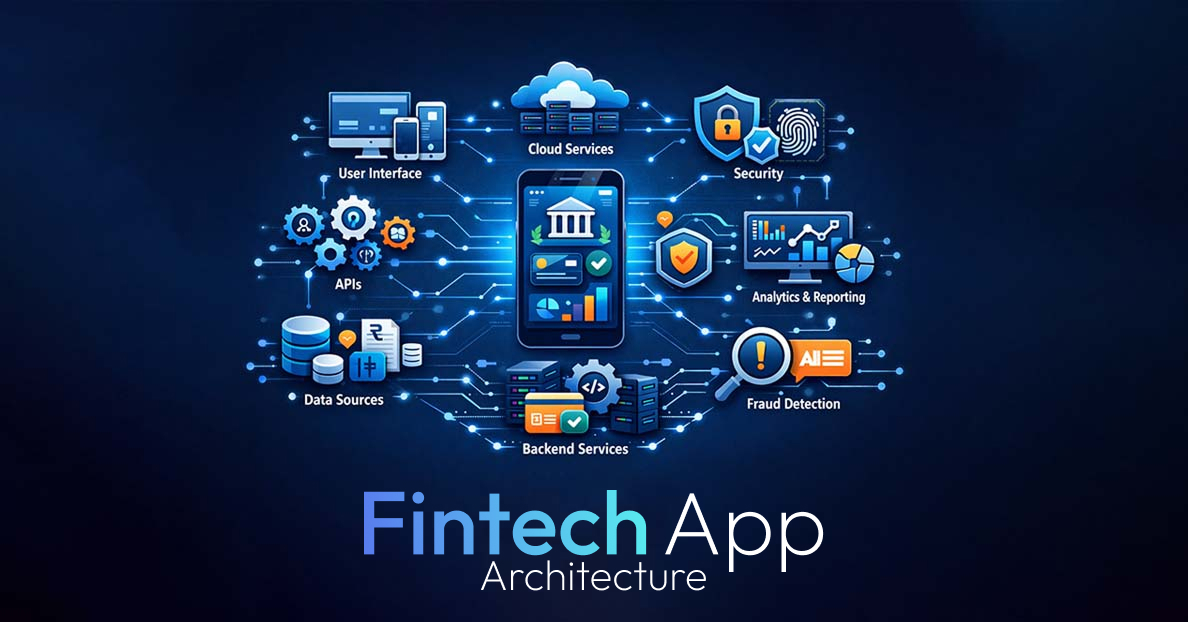
The purpose of fintech app architecture is to provide a foundation for building systems that deliver digital financial services. Fintech architectures support components and define those components’ relationships to one another.
Currently, many modern fintech app development solutions are built on a combination of cloud-based computing, microservices, and distributed ledger technologies.
What are the Core Components of Fintech App Architecture?
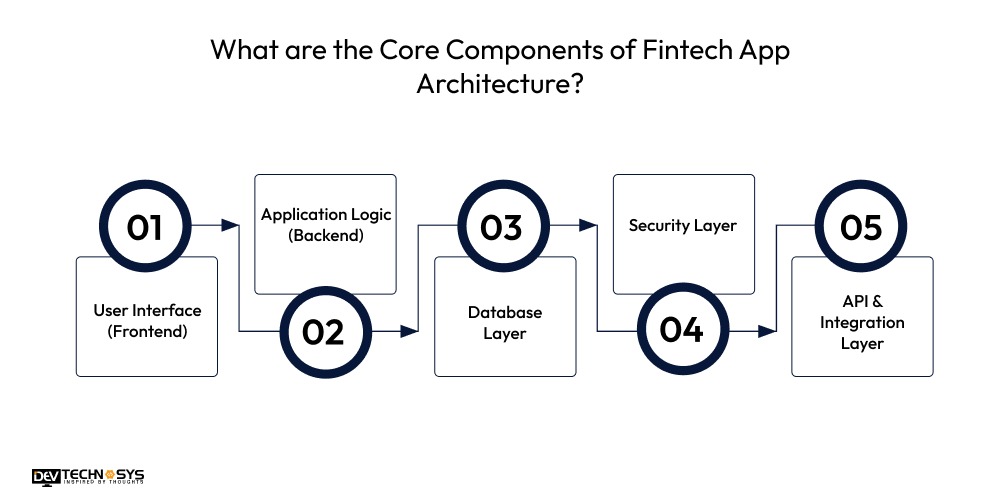
Developing secure, efficient, and scalable apps within the Fintech space stems from the understanding of its architecture’s fundamental features. These include the components that make up an intuitive front end, a strong backend, a secure database, the right security layer, and how to facilitate integration between APIs.
1. User Interface (Frontend)
The front end of Neobank provides a way for users to access and use the app. It includes features such as usability, easy navigation, responsive web design, and a positive overall experience for the user. These features allow users to conduct transactions quickly and easily.
2. Application Logic (Backend)
The backend is responsible for the application’s core business logic, processes for conducting transactions, and communication between systems, as well as processing of data, securing of user authentication.
The fintech backend technologies provide the logical operations needed to support the application. It serves as the foundation of the application as it provides data and functionality.
3. Database Layer
The database layer supports the storage, organization, and rapid retrieval of financial data in a secure manner. It uses either a relational or NoSQL data model to manage the volume of transactions made, consistently maintains the integrity (or accuracy) of the financial transactions, and provides rapid access to financial data.
4. Security Layer
The security features of the application are built into the application as layers surrounding all areas of protection of personal and financial information using encryption, authentication, and authorization. Some of the features included within the security layers are multi-factor authentication, fraud detection, and the use of secure protocols.
5. API & Integration Layer
This layer allows for communication between different internal mobile banking app development solutions and third-party apps such as payment gateways, banking APIs, and identity verification systems.
The API & integration layer facilitates seamless data exchange, increases overall functionality, and ultimately improves the ability of the fintech ecosystem.
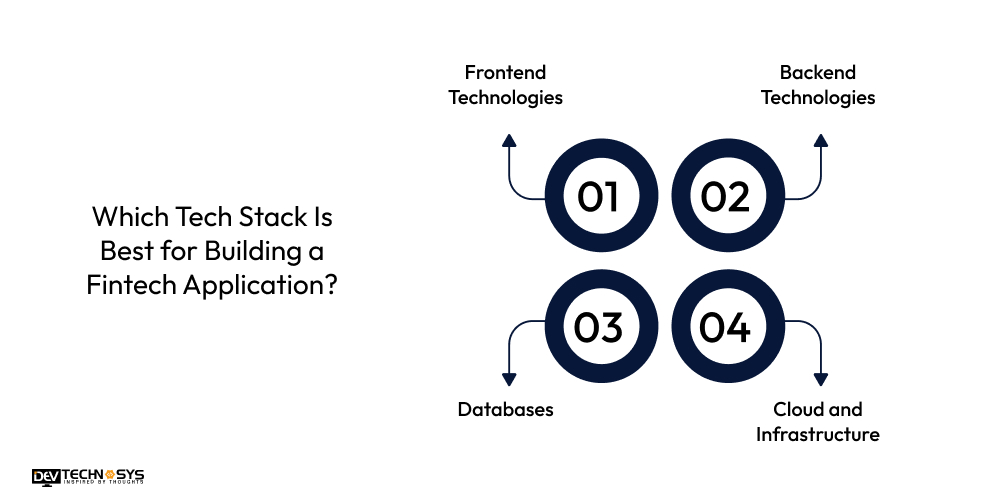
Which Tech Stack Is Best for Building a Fintech Application?
When selecting your fintech tech stack, it is very important that you choose the best components that will provide great performance, scalability, and security. It is critical to have strong frontend frameworks, robust backend programming languages, and stable databases.
1. Frontend Technologies
Web interfaces are powered by fintech frontend technologies such as React, Angular, or Vue, whereas mobile applications are powered by frontend toolkits such as Flutter, Swift, or Kotlin that deliver a responsive, intuitive, and fast experience for users across multiple devices to manage accounts, make payments, and access Fintech services.
2. Backend Technologies
Backend technologies include programming languages (Java, Python, Node.js, or Go) and backend development frameworks (Spring Boot, Django, or Express).
The backend of an application performs business logic, transaction processing, and server-side processing, providing reliability, scalability, and seamless performance in Fintech applications.
3. Databases
Database systems are responsible for managing and storing sensitive financial data. Relational databases (Postgres and MySQL) support structured data and transactional integrity. While NoSQL databases (MongoDB and Cassandra) provide flexibility, high scalability, and quick access to large-scale Fintech system data.
4. Cloud and Infrastructure
Cloud computing platforms (AWS, Google Cloud, Azure) provide scalability, flexibility, and global access through containerization tools for deploying, managing, and scaling Fintech applications that ensure high availability, fault- tolerance, and optimize performance.
Industry Insights:
According to Reuters, London now leads as a top global fintech hub, surpassing traditional centers like San Francisco and New York, reflecting rising European fintech investment (up 37% from 2022-25).
Want a chatbot demo or pricing? Fill the form and talk to our experts today.
Pick what you need below — you can select more than one — then tap Get detail to continue.
-
Chatbot demo dashboard
-
Cost to develop an app
-
Industry report
-
Case study
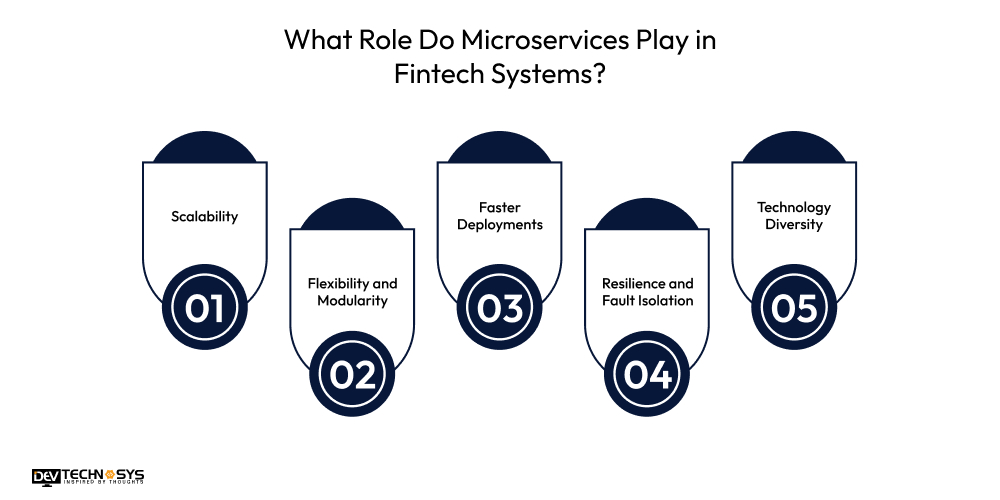
What Role Do Microservices Play in Fintech Systems?
By modularizing, scaling, and providing resilience to fintech systems using microservices, their components can be created as discrete applications. That can be deployed rapidly, maintained with ease, isolated from errors in other applications, and easily modified as business needs change.
1. Scalability
Microservices in fintech provide the ability to scale parts of a fintech structure independently to enable the company to handle increased transaction or user demand without impacting other functions on the platform.
2. Flexibility and Modularity
Fintech microservices architecture separates portions of a ewallet app development solution into independent components. Therefore, developers can make changes to any of the independent components with little or no impact on the overall application. This modularity provides an opportunity for rapid innovation and easier maintenance of an increasingly complex FinTech ecosystem.
3. Faster Deployments
Microservices fintech applications enable the independent deployment of new features or updates. Since each service is developed independently, it can be developed, tested, and deployed separately in order to minimize any disruption to the overall FinTech structure.
4. Resilience and Fault Isolation
In a digital banking architecture, the failure of a single service (e.g., payment processor) does not cause the entire system to crash. This failure isolation increases the overall fault tolerance of a given FinTech system and aids operational continuity for an organization’s critical services.
5. Technology Diversity
Scalable fintech microservices provide organizations with the ability to select their technology stack based on the needs of each service. This flexibility allows FinTech platforms to take advantage of the best tools for each function, thus maximizing performance and efficiency at all levels of their systems.
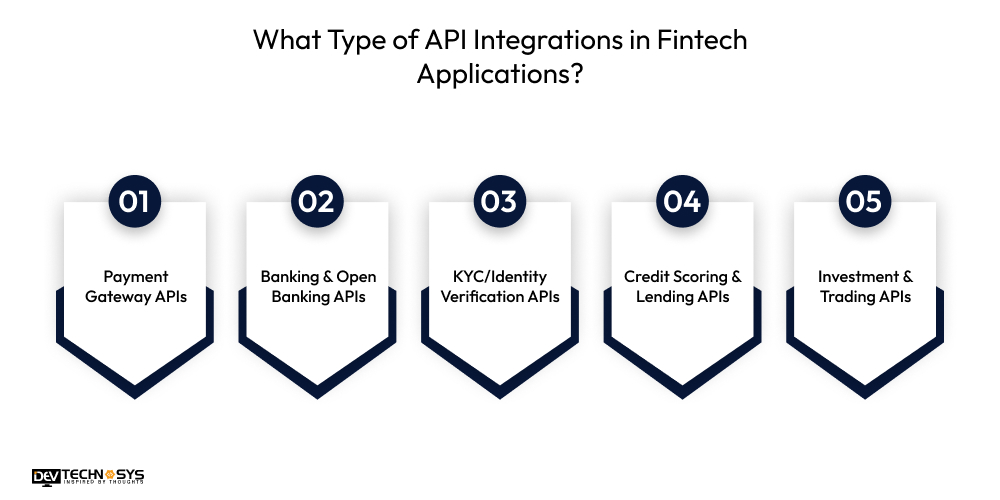
What Type of API Integrations in Fintech Applications?
APIs enable the development of Fintech apps because they provide connections between payment gateways, banks, KYC providers, credit scoring services, trading applications, and fraud detection technologies.
1. Payment Gateway APIs
An architectural element that enables configuration to allow the application to validate, authenticate, and authorize payments to ensure the security of the online transaction process.
The API provides authentication for real-time transactions for credit card, debit card, digital wallet, and UPI payment gateway integration, as well as real-time PCI-DSS compliance.
2. Banking & Open Banking APIs
Banks and financial institutions provide APIs to enable fintech applications to interface directly to the FI’s database, allowing the Fintech application to obtain the user’s Account Information, initiate a fund transfer, and retrieve the user’s transaction history. Open Banking APIs provide a standardized and secure method of connecting.
3. KYC/Identity Verification APIs
Fintech applications use KYC APIs to verify the identity of an incoming application by accessing the application against the Government of Canada’s Database, an ID document, or utilizing biometric identification. They streamline the onboarding process, increase efficiency in the onboarding process, and lower the risk of fraud.

4. Credit Scoring & Lending APIs
Fintech mobile app development solutions use credit scoring APIs to evaluate the creditworthiness of an applicant by accessing alternative forms of financial data/reports.
Credit Scoring APIs integrate with Credit Bureaus, Financial Institutions, or AI-driven scoring engines to facilitate timely, automated, and data-driven loan approvals and reduce the risks associated with lending.
5. Investment & Trading APIs
These APIs give access to stock markets, trading platforms, and portfolio management systems. They enable access to market data in real-time (on-demand), order execution, and investment tracking to allow FinTech applications to take advantage of the ability to offer brokerage, robo-advisory, or wealth management services.
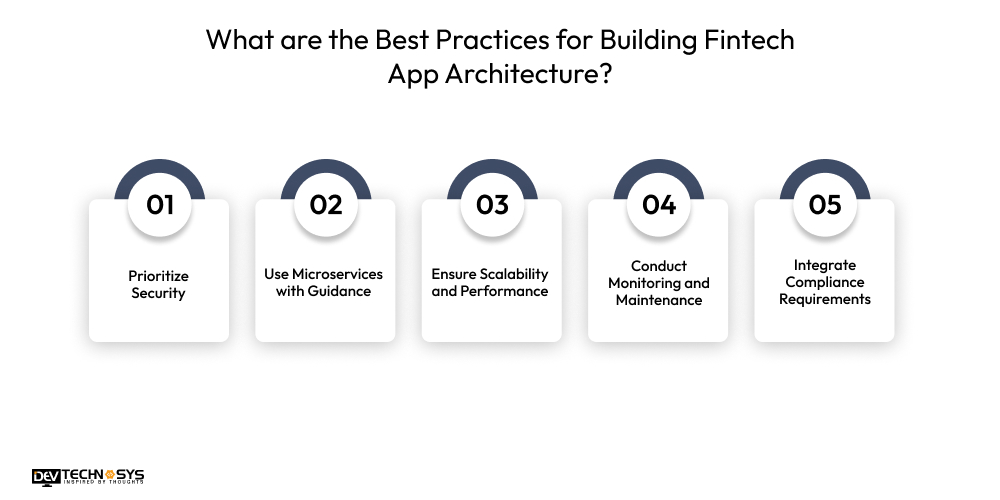
What are the Best Practices for Building Fintech App Architecture?
Building a safe and scalable fintech app architecture uses best practices. In order of importance, implement security as a top priority, monitor continually, treat microservice adoption wisely, and continue to enhance performance and scale throughout the lifecycle of the application.
1. Prioritize Security
Ensure encryption, multiple-factor authentication, and safe programming processes are applied right away. This promotes strong security for sensitive data, compliance with regulations, and user trust.
2. Use Microservices with Guidance
Utilize microservice architecture to break functions into modules that can be created, scaled, and deployed independently. Plan properly to reduce complexity and ensure fault isolation and flexibility; there is much to avoid in the use of microservices banking architecture.
3. Ensure Scalability and Performance
Your peer-to-peer payment app must be designed to continue accommodating increasing numbers of users and transactions. Use cloud infrastructure, balanced loading, and efficient database solutions to maintain speed, response time, and dependability throughout the peak usage levels.
4. Conduct Monitoring and Maintenance
Regularly monitor the performance of your system and identify any anomalies; maintain your system through frequent updates. Continuous monitoring will allow for quick detection of failures and reduce the amount of downtime while maintaining efficient operation of critical services from your fintech.
5. Integrate Compliance Requirements
Incorporate compliance requirements such as PCI-DSS, GDPR, or AML into your fintech app architecture. Compliance provides the framework for providing legal protection for the data of end-users and supports the business’s credibility and trust from end-users and their financial partners.
Conclusion
Ultimately, it is absolutely critical that you have a great fintech app design architecture made up of the right technologies and utilize either microservices or APIs together with both of those elements. A well-designed fintech app will provide a high degree of modularity, create back-end systems that are highly reliable, and develop APIs that are seamless in terms of the user experience.
Engaging a reputable fintech app development company will help ensure that you have a trustworthy partner to provide expert guidance in developing compliant apps and implementing best practices.
Frequently Asked Questions
Find answers to the most common questions related to this article.
The cloud infrastructure allows fintech apps to scale quickly, be flexible in how they operate, and access the applications anywhere in the world. Services from AWS, Azure, Google Cloud and the use of Container technology help create high availability, fault tolerance, speed to market, and efficient resource management for secure financial transactions.
It enhances scalability, minimizes downtime due to faults, increases fault tolerance, accelerates the speed at which new features are built, and provides the ability to maintain flexibility. While allowing the fintech platform to evolve rapidly without impacting the other applications on the platform.
APIs allow fintech applications to connect to third-party services. They allow secure transmission of real-time data, without the need to build features from the ground up. They allow for seamless communication between the fintech application's internal and external systems.
The future of fintech application architecture will include more AI-driven microservices, greater integration of blockchain technology, cloud native applications, and the expansion of API ecosystems. As a result, the next generation of financial services is expected to provide greater levels of scalability, security, automation, and overall improved user experience.
An application's performance, scalability, and maintainability depend on the fintech development tech stack. The correct choice of front-end, back-end, databases, and cloud infrastructure will result in safe transactions between users, smooth functionality, quick development, and an optimized user experience for fintech apps.